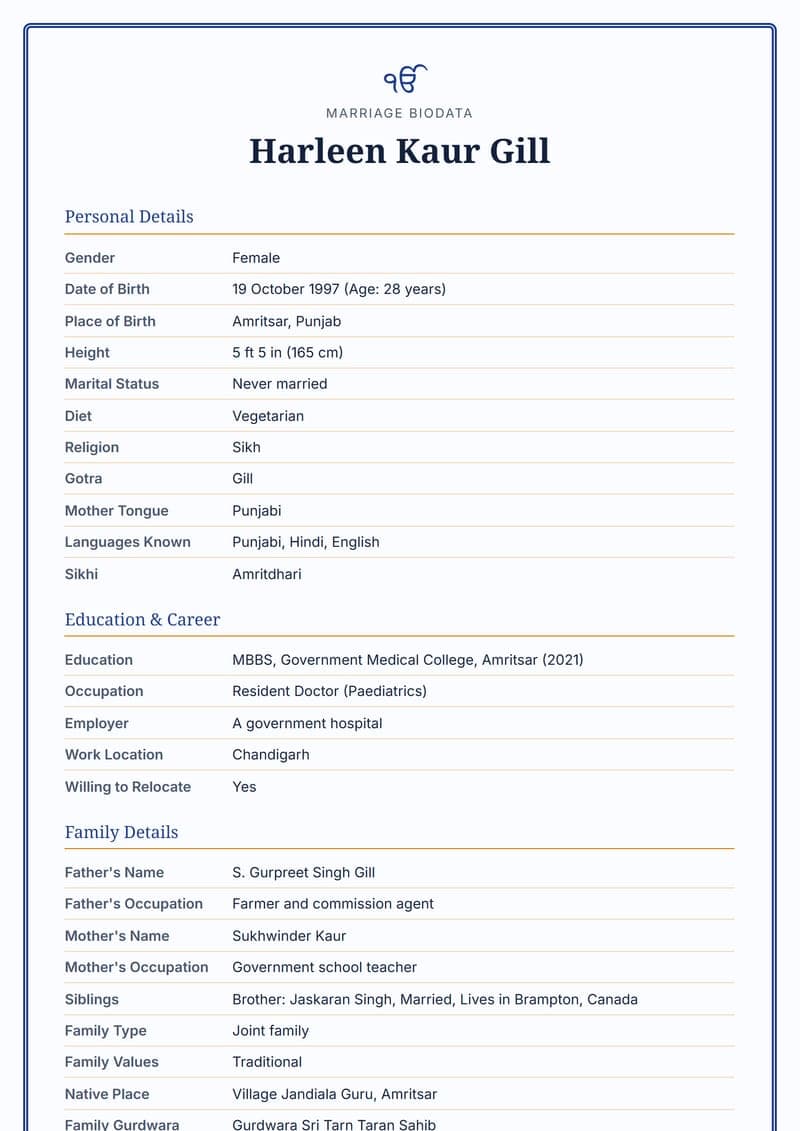
The Sikh biodata format
A Sikh marriage biodata follows the familiar order (personal details, education and work, family, about me, contact) with a few lines that Sikh families read first.
Ik Onkar at the top
Most Sikh biodatas open with ੴ (Ik Onkar). Some add the Fateh, "Waheguru Ji Ka Khalsa, Waheguru Ji Ki Fateh". It sets a gursikh tone straight away.
Sikhi: Amritdhari, Keshdhari or Sahajdhari
Families want to know where the person stands in their Sikhi:
- Amritdhari: has taken Amrit and keeps the five Ks
- Keshdhari: keeps uncut hair; for boys, wears a turban
- Sahajdhari: follows Sikhi without keeping kesh
One word is enough, and it saves families from guessing from the photo.
Got
Most Sikh families write the got (for example Gill, Sandhu, Grewal, Bedi) because marriage within the same got is usually avoided. Some also write the mother's got.
Family, village and Gurdwara
Punjabi families place great weight on roots. Along with parents and siblings, write:
- The village or town the family comes from
- The Gurdwara the family is associated with
- Where close relatives live, especially abroad. Many Punjabi families have relatives in Canada, the UK or Australia, and that often matters to the other family.
Horoscope details
Sikh teaching does not use kundli matching for Anand Karaj, so most Sikh biodatas leave it out. If your family does follow it, you can add the birth time and rashi as with any biodata.
For families abroad
If the person lives in Canada, the UK, Australia or the US, write the country, city, visa or residency status and whether they plan to settle there. It is one of the first questions families in Punjab will ask.
Make your biodata now
Fill simple steps and see it update as you type. Free preview.
Start your biodata