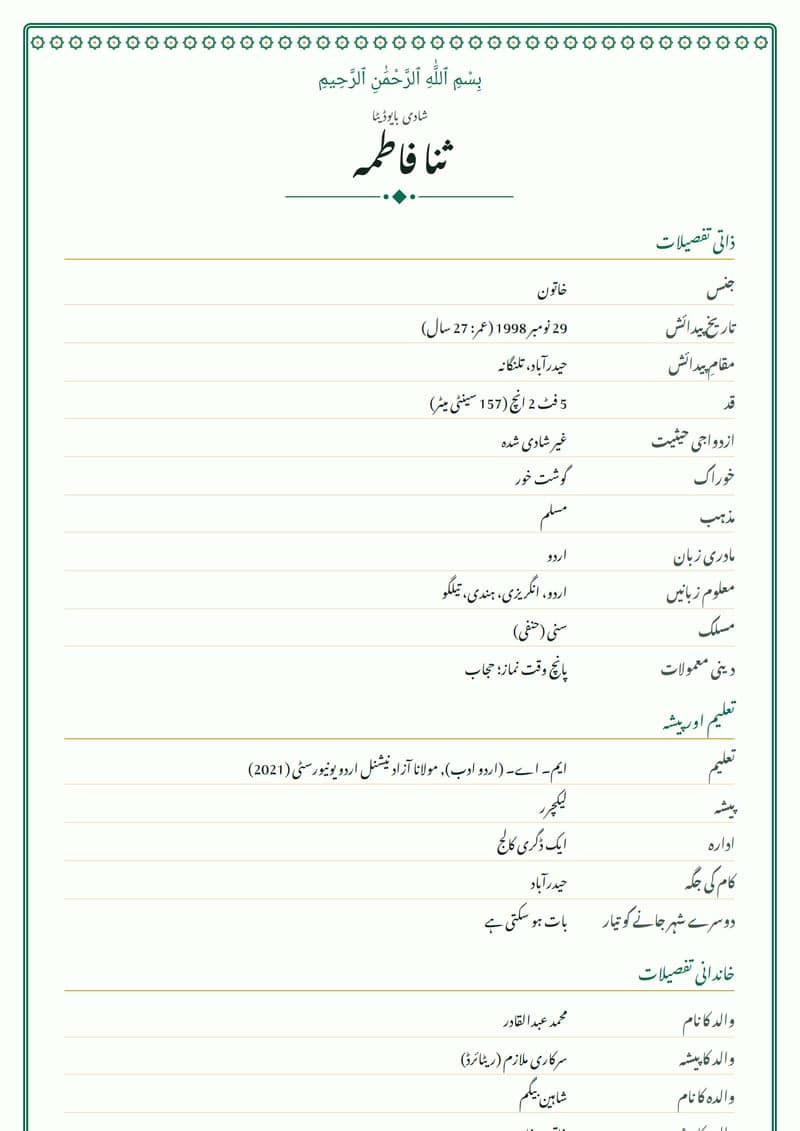
Urdu biodata headings, in order
| اردو | English | Notes |
|---|---|---|
| نام | Name | Full name |
| تاریخِ پیدائش، جائے پیدائش | Date and place of birth | Birth time is usually not needed |
| قد | Height | Feet and inches |
| تعلیم | Education | Degree and institution |
| پیشہ | Occupation | Job, employer type and city |
| مسلک | Sect / maslak | e.g. سنی (حنفی) |
| دینی معمولات | Religious practice | Optional, one short line |
| والد کا نام، والدہ کا نام | Parents' names | With their work |
| بہن بھائی | Siblings | Married or unmarried |
| آبائی وطن | Native place | Town or district |
| اپنے بارے میں | About me | Two or three lines |
| توقعات | Expectations | The partner hoped for |
| رابطہ | Contact | Guardian's name and number |
Opening and layout
An Urdu biodata usually opens with بسم اللہ الرحمٰن الرحیم, or 786, and is laid out right to left, with headings on the right and details on the left. When you choose Urdu as the biodata language, the layout switches automatically.
What families look for
Maslak and deen
Write the مسلک (for example سنی حنفی, شیعہ اثنا عشری or اہلِ حدیث) and, if the family wishes, one line on دینی معمولات (religious practice), such as پانچ وقت نماز (prays five times) or حجاب.
Family and native place
Families place great weight on the خاندان (family): the father's and mother's names and work, brothers and sisters and where they live, and the آبائی وطن (native place).
About me, in Urdu
"نرم مزاج، دیندار اور خاندان سے محبت کرنے والی۔ اردو شاعری پڑھانا میرا شوق ہے؛ فارغ وقت میں خطاطی اور کھانا پکانا پسند ہے۔"
It means: gentle, devout and loving towards her family; teaching Urdu poetry is her passion, and in free time she enjoys calligraphy and cooking.
Make your biodata now
Fill simple steps and see it update as you type. Free preview.
Start your biodata